Rib Wings, Party Ribs: Mike Hiller Invented Them Both
The internet has a short memory and a talent for orphaning good ideas. What you are now seeing everywhere under the name “party ribs,” on TikTok and Traeger and a hundred recipe blogs that cannot tell you where the technique came from, started with a June 2022 story on EscapeHatchDallas.com. Mike Hiller called them Rib Wings. The name has since changed. The basic method has not.
Here is what most people do wrong with ribs. They commit. They commit to the rack, to the three-hour unwrapped phase and the two hours in foil and the one hour back on the grate, to the membrane they spent ten minutes peeling off with a paper towel and a curse. They commit to smoke on two sides and steam on the others. Hiller had a different idea. Take a rack and slice it into individual one- or two-rib sections before cooking. That single decision changes everything downstream.
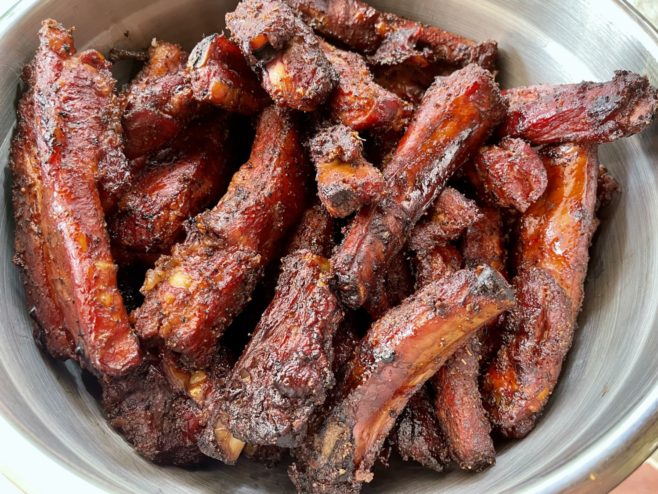
The membrane, the one you’ve been wrestling off whole racks since someone told you it was mandatory, shrinks onto the bone on its own as the ribs cook. No paper towel, no frustration. Smoke moves around all four sides of each rib instead of two. Fat renders cleaner. The edges go slightly crispy. The whole rib becomes the crust, and the crust is where things get interesting.
Season every surface with 16-mesh black pepper, kosher salt, brown sugar, and garlic powder. Or use whatever rub you trust. Then arrange the sections on your smoker grate at 250 degrees Fahrenheit with space between each piece so the smoke can actually circulate. That’s most of the setup. That’s most of the work.
They go for about two hours. After the first hour, start spritzing every thirty to forty-five minutes with a mixture of apple cider vinegar, brown sugar or maple syrup, a pour of Worcestershire, and a little Tabasco. The goal is lacquer: thin, sweet, hot, building in layers across the cook. In the final thirty minutes, bring the temperature up to 300 degrees to tighten the edges and set the bark. Pull them when the meat has shrunk back from the bone about half an inch. That’s the signal. That’s the rib telling you it’s done.
The total time lands under three hours. No flipping. No foil. No second-guessing the wrap window. NYT bestselling author Larry Olmsted wrote about the technique in Forbes not long after Hiller published it. Steven Raichlen’s BarbecueBible.com spread the word further. Since then, the method traveled the internet under the name party ribs, collecting followers and losing its return address. One recipe site recently admitted it had searched Reddit, TikTok, and Instagram and still couldn’t find the originator. The originator was here, three years before they went looking.
“The fat renders more cleanly than full racks,” Olmsted wrote, “and the exterior is slightly crispy all around each rib.” He called them better than any ribs he’d made before. Hundreds of readers have since written in to say they’ve abandoned the full rack entirely. That kind of conversion doesn’t happen because a technique is clever. It happens because it works.
Call them Rib Wings. Call them party ribs. Make them this weekend.
How to Make Rib Wings (Party Ribs)
What You’ll Need
One rack of baby back or St. Louis-cut pork spareribs, sliced into 1- to 2-rib sections before cooking. 16-mesh black pepper, kosher salt, brown sugar, garlic powder, or your preferred rib rub. For the spritz: apple cider vinegar, brown sugar or maple syrup, Worcestershire sauce, Tabasco.
The Method
Season all sides of each rib section thoroughly. Place on a smoker at 250 degrees Fahrenheit with space between sections for smoke circulation. After the first hour, spritz every 30 to 45 minutes with the vinegar mixture. In the final 30 minutes, raise the temperature to 300 degrees. Pull from the smoker when the meat has shrunk back from the bone about half an inch. Total cook time: under 4 hours.
Frequently Asked Questions
What are party ribs, and are they the same as Rib Wings?
Yes. Party ribs is the name that spread across social media and recipe sites starting around 2023. Rib Wings is the original name, coined by Mike Hiller in a June 2022 story on EscapeHatchDallas.com. The technique is identical: a rack of pork ribs sliced into individual sections before cooking, giving each rib 360 degrees of smoke, seasoning, and bark.
What cut of ribs works best?
St. Louis-cut spareribs are the preferred choice. They carry more fat and connective tissue than baby back ribs, which means better rendering and deeper flavor across the cook. Baby back ribs can work but will cook faster and need closer monitoring.
Do I need to remove the membrane before cooking?
No. That’s one of the technique’s core advantages. Slicing the rack into individual sections before cooking allows the membrane to shrink back onto the bone on its own during the cook. It’s one less step, and it works.
What temperature should my smoker be set to?
Start at 250 degrees Fahrenheit for the first two and a half to three hours, then raise to 300 degrees for the final 30 minutes to crisp the edges and set the bark.
How do I know when they’re done?
When the meat has visibly shrunk back from the bone by about half an inch, they’re ready. An instant-read thermometer reading of 195 to 203 degrees Fahrenheit confirms the collagen has broken down and the ribs will have the pull-apart texture you’re after.
Can I make these without a smoker?
A charcoal grill set up for indirect cooking with wood chunks added to the coals will get you close. A gas grill with a smoker box will add some smoke flavor. The technique is built around low-and-slow smoke, so the closer you can get to that environment, the better the result.